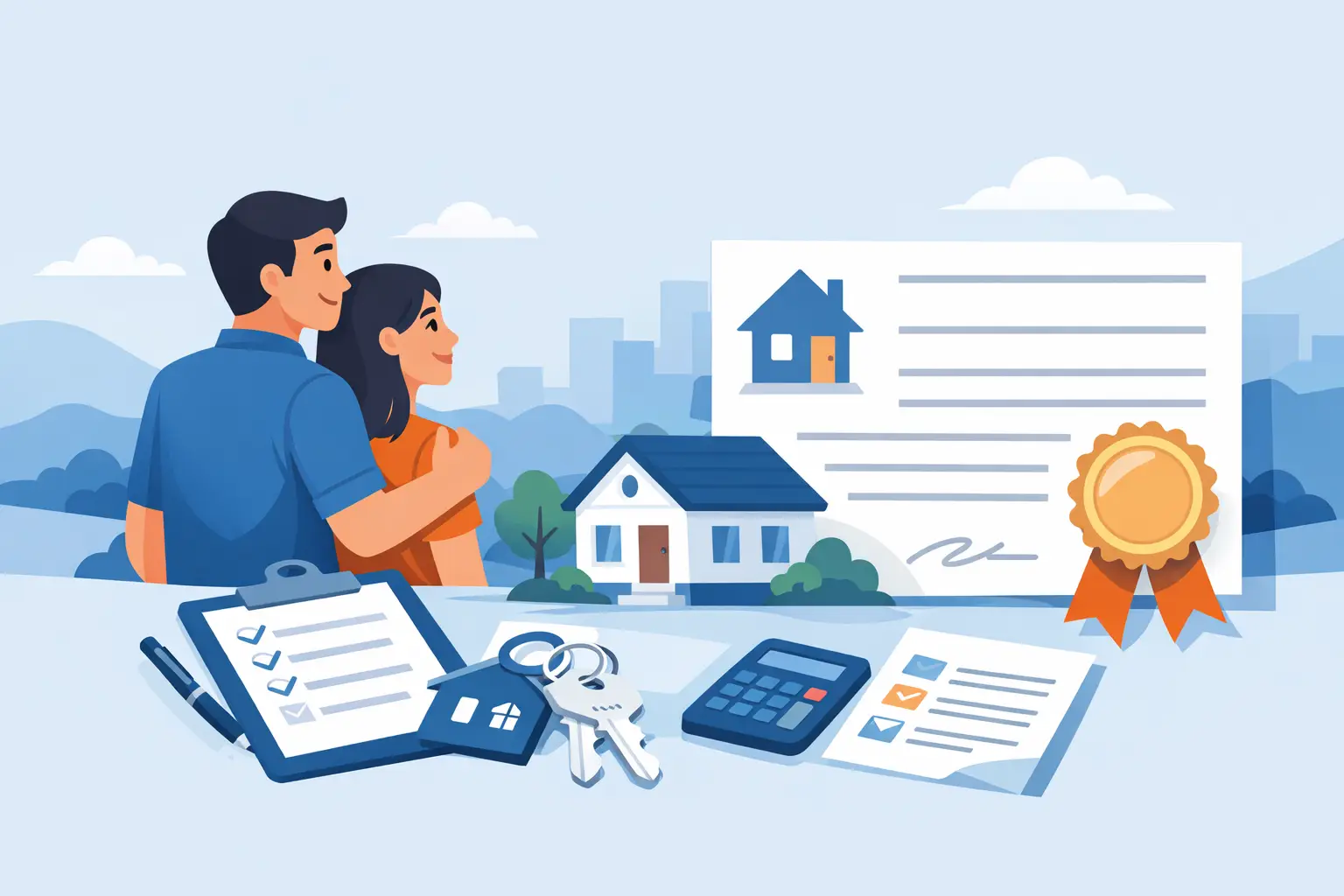
A first time homebuyer education certificate can feel like one more box to check when you’re already juggling credit, savings, loan options, and home prices. But in many cases, it is not busywork. It is a required step that can open the door to down payment assistance, certain loan programs, and a smoother path to closing.
If you have seen this requirement pop up in a lender conversation or housing program application, the good news is that it is usually straightforward. The key is knowing what the certificate actually does, who requires it, and how to make sure the course you take will count.
What is a first time homebuyer education certificate?
A first time homebuyer education certificate is proof that you completed an approved homebuyer education course. These courses are designed to help buyers understand the full picture of buying and owning a home, not just getting a mortgage.
Most courses cover the basics of budgeting, credit, mortgage types, down payment requirements, closing costs, home shopping, inspections, homeowners insurance, and what to expect after you move in. Some also explain how to avoid common first-time buyer mistakes, like stretching your budget too far or misunderstanding escrow and property taxes.
The certificate itself is not a loan approval, and it does not guarantee you will qualify for financing. Think of it as a completion record. It tells a lender, housing agency, or assistance program that you finished the required education.
Why this certificate matters more than people expect
For many buyers, the biggest value is simple: access. A first time homebuyer education certificate is often required for state and local down payment assistance programs, housing grants, and certain affordable mortgage options. If you skip it or take the wrong course, you could delay your application or lose access to benefits that would have reduced your upfront cash needs.
It can also help you make better decisions before you sign anything. A lot of buyers focus on the monthly payment alone, then get surprised by taxes, insurance, HOA dues, maintenance, or cash needed at closing. A solid course helps you see the full cost of homeownership before you commit.
That matters because buying your first home is not just about getting approved. It is about staying comfortable with the payment after the excitement wears off.
Who usually needs a first time homebuyer education certificate?
Not every buyer needs one. The requirement depends on the loan program, assistance program, and sometimes the borrower profile.
You are more likely to need a certificate if you are applying for down payment assistance through a state housing finance agency, local municipality, nonprofit housing organization, or employer-sponsored homeownership program. Some conventional loan products aimed at first-time buyers may also require homebuyer education if all borrowers are first-time buyers. In other cases, only one borrower needs to complete the course.
FHA, VA, and standard conventional loans do not always require a certificate on their own. But if you layer in a grant or assistance program, the education requirement often shows up quickly.
This is where details matter. A buyer may hear, “Take a homebuyer course,” and assume any course will work. That is not always true. Some programs require a HUD-approved counseling agency, a specific online provider, or a course completed within a certain timeframe before closing.
What topics do these courses usually cover?
Most approved homebuyer education courses are built around practical decisions you are already trying to make. They usually explain how lenders evaluate income, debt, credit, and cash reserves. They also walk through mortgage terms in plain English, which helps if words like PMI, escrow, debt-to-income ratio, and pre-approval still feel fuzzy.
You will also learn how to set a realistic budget, compare loan options, estimate upfront costs, and prepare for recurring expenses after purchase. Some courses touch on fair housing, the importance of a home inspection, and how to protect yourself from predatory lending.
A good course does not try to turn you into a loan officer. It gives you enough context to ask better questions and avoid rushing into a payment that only works on paper.
Online vs. in-person courses
Today, many buyers complete their first time homebuyer education certificate online, and for good reason. Online courses are flexible, often less expensive, and easier to fit around work and family schedules. You can usually start and stop as needed, and many platforms issue the certificate right after completion.
In-person classes still exist and can be helpful if you learn better by asking questions live. Some local housing agencies also pair classroom education with one-on-one counseling, which can be especially useful if your credit, income, or savings picture needs extra planning.
Neither format is automatically better. The best choice depends on what your program accepts and how much guidance you want. If you are balancing multiple moving parts, like improving credit while also trying to qualify for assistance, the counseling option may be worth the extra time.
How to make sure your certificate will count
Before you pay for any course, ask the lender or program administrator one very specific question: Which course providers do you accept?
That one question can save you frustration. Some buyers complete a course they found online, only to learn later that their assistance program requires a different provider or a HUD-approved agency. Others take the right course but wait too long to send the certificate, which slows the underwriting process.
Make sure you confirm four things: whether the course must be online or in person, whether the provider must be specifically approved, how recent the certificate must be, and whether every borrower must complete it or only one.
Once you finish the course, save the certificate immediately. Keep both a digital copy and a printed one if possible. It is a small step, but it helps when documents start flying back and forth during the mortgage process.
How long does it take and what does it cost?
Many online courses take somewhere between two and eight hours, depending on the provider and whether counseling is included. Some can be completed in one sitting, while others are broken into modules.
Cost varies too. Some programs offer free education. Others charge a modest fee. In general, this is one of the smaller costs in the homebuying process, but it still makes sense to confirm whether your assistance program offers a no-cost or discounted option.
If a course includes personalized counseling, the price may be higher, but that does not automatically mean it is overpriced. For some buyers, that added guidance helps them correct issues early enough to qualify for a better loan or avoid a deal that would have put too much strain on their finances.
Common mistakes buyers make
The biggest mistake is waiting too long. Buyers often focus first on the pre-approval and only deal with the education requirement once they are under contract. That can create unnecessary pressure, especially if the course provider has limited availability or the program requires extra counseling.
Another mistake is assuming the certificate replaces financial preparation. It does not fix credit, reduce debt, or create down payment funds. It supports the process, but you still need the income, credit profile, and savings strategy to move forward.
A third issue is treating the course like a formality and clicking through it too fast. The material may feel basic in parts, but many buyers pick up something useful about closing costs, affordability, or post-purchase expenses that changes how they shop.
Does the certificate expire?
Sometimes, yes. Program rules vary. Some certificates are valid for a year, while others may have shorter or longer windows. If your home search stretches out, especially in a competitive market, double-check whether you will need to retake the course before closing.
This is another reason to line up your timing carefully. Too early, and the certificate could expire. Too late, and you may be scrambling to complete a requirement while trying to satisfy underwriting conditions.
The smartest way to approach it
Treat the first time homebuyer education certificate as part of your financing strategy, not just a class requirement. If you complete the right course early enough, it can help you qualify for assistance, understand your budget more clearly, and move through the mortgage process with fewer surprises.
At Clear to Close: Your Mortgage Guide, this is exactly where preparation pays off. Buyers who understand the rules before they shop tend to make calmer, stronger decisions than buyers who are trying to decode everything mid-transaction.
If a certificate is required for your program, take it seriously, but do not overcomplicate it. Confirm the approved provider, complete the course, save your documentation, and use what you learn to shape a home purchase you can actually feel good about months after closing. That is the real value of the process.
Leave a Reply