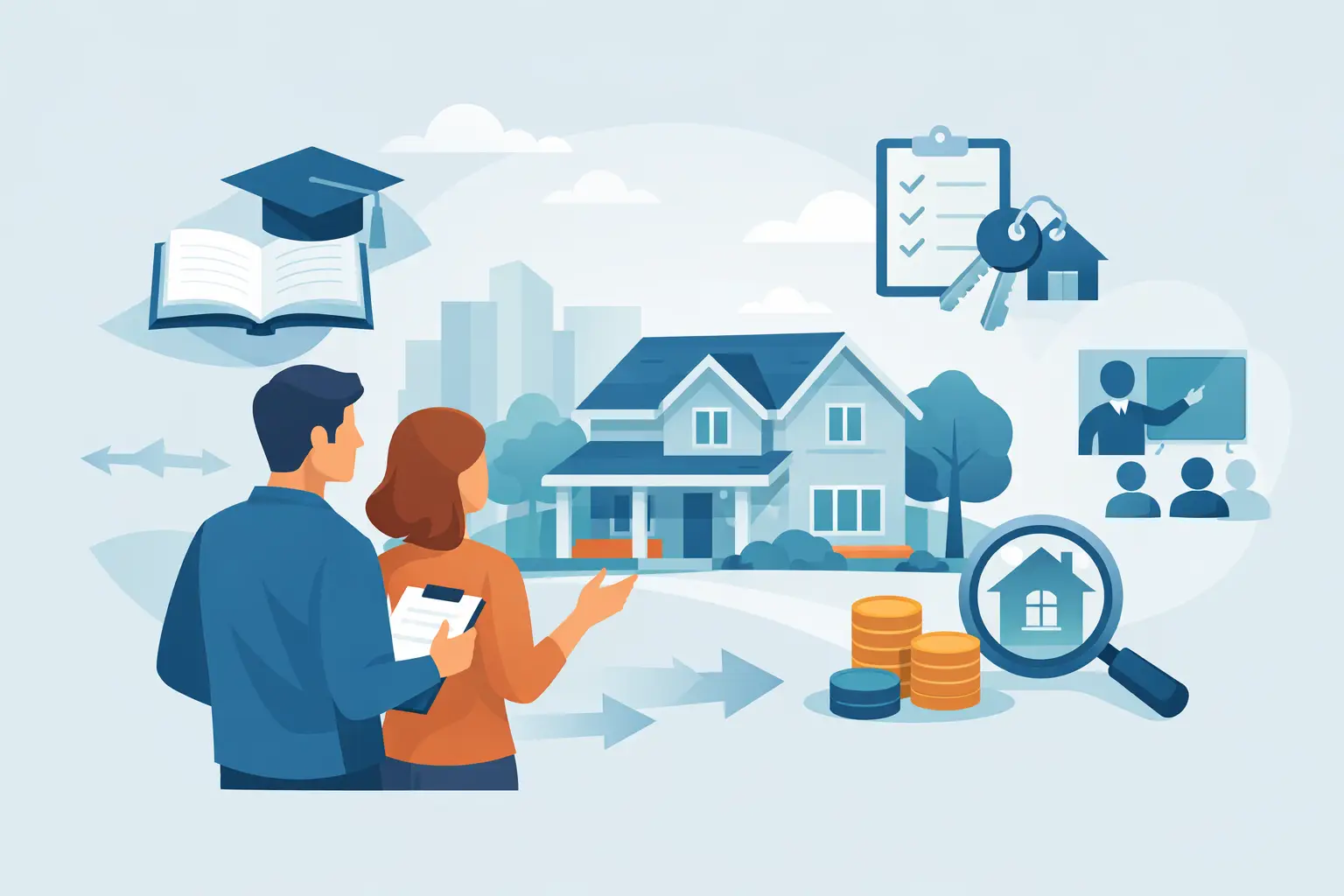
Buying your first home can feel strangely backward. Before you even pick paint colors or compare neighborhoods, you may be asked to take a class. That is where first time home buyer education programs come in. They are designed to help you understand the mortgage process, prepare your finances, and make better decisions before you sign a contract.
For many buyers, that sounds optional. Sometimes it is. But in a lot of cases, homebuyer education is either required for a loan or assistance program, or strongly recommended because it can save you from expensive mistakes. If you are trying to figure out whether one of these programs is worth your time, the short answer is yes, with a few caveats.
What first time home buyer education programs actually do
These programs are meant to teach the basics of homeownership and mortgage readiness in plain English. A solid course usually covers credit, budgeting, down payment options, loan types, closing costs, the home search, inspections, and what happens after you get the keys.
That last part matters more than many people expect. Good education programs do not stop at getting approved. They also talk about the monthly reality of owning a home, including repairs, escrow changes, property taxes, insurance, and what to do if your budget gets tight.
In other words, these programs are not just about buying a house. They are about staying financially stable after the purchase.
Why these programs matter more than people think
A first-time buyer is often making several big decisions at once. You are comparing homes, trying to understand loan terms, watching interest rates, and figuring out how much cash you need upfront. That is a lot to carry if no one has explained the system clearly.
Education programs help slow the process down. They give you context before you are under pressure. That can make it easier to tell the difference between a smart stretch and a risky one.
They can also help buyers avoid a common problem: focusing only on the monthly mortgage payment. A home may look affordable on paper, but once taxes, insurance, maintenance, utilities, and commuting costs are added in, the numbers can shift fast. A good class teaches you how to look at the full picture.
There is also a confidence factor. Buyers who understand the process tend to ask better questions, compare options more carefully, and feel less intimidated when talking to lenders and real estate professionals.
When first time home buyer education programs are required
Not every mortgage requires a class, but many assistance programs do. If you are using down payment assistance, a grant, or a special state or local first-time buyer benefit, education is often part of the deal.
Some conventional low-down-payment programs may also require at least one borrower to complete homebuyer education, especially if all borrowers are first-time buyers. Certain nonprofit or community lending programs have similar rules.
Even when it is not mandatory, there can still be a practical reason to complete it. If a program opens the door to assistance with your down payment or closing costs, spending a few hours on education is usually a strong trade.
The key is not to assume that every class is interchangeable. If you need a certificate for a loan or assistance program, make sure the course is approved by that specific program before you enroll.
What to expect from a homebuyer education course
Most first-time buyer courses are either online, live virtual sessions, in-person workshops, or a mix of self-paced learning and counseling. Online courses are popular because they are flexible and easy to complete on your own schedule. Live classes can be useful if you learn better by asking questions in real time.
The format matters less than the quality. A useful course should explain how lenders look at debt, income, assets, credit history, and reserves. It should also break down terms that confuse many buyers, like preapproval, private mortgage insurance, debt-to-income ratio, and cash to close.
Some programs include one-on-one counseling, which can be especially helpful if your situation is not straightforward. Maybe your credit is improving but not quite where you want it. Maybe you have student loans, variable income, or limited savings. A counselor can help you connect the general information to your actual numbers.
The biggest benefits for first-time buyers
The clearest benefit is that education can help you buy with fewer surprises. That may sound simple, but it has real value. Surprises are expensive when you are making one of the biggest financial commitments of your life.
Another benefit is access. Some buyers qualify for more help than they realize, especially through state housing agencies, local programs, or employer-based assistance. Education programs often introduce these options early, before you miss an opportunity.
There is also a long-term benefit that does not get enough attention. Buyers who understand the financing side of homeownership are often better prepared for future decisions too, like whether to refinance, remove mortgage insurance, tap equity carefully, or prepare for a move.
That said, not every course will transform your situation overnight. If your credit needs major work or your savings are far from where they need to be, a class alone will not fix that. It is a starting point, not a shortcut.
How to tell if a program is worth your time
A worthwhile program should be clear, practical, and connected to real decisions. If the material feels vague or overly promotional, that is a red flag. You want education, not a sales pitch.
Look for a course that covers the full buying process, not just mortgage basics. The strongest programs explain how to prepare before applying, how to compare affordability, how to avoid overbuying, and how to plan for ownership costs after closing.
It also helps if the course is recognized by housing agencies, government-backed programs, or lenders that commonly work with first-time buyers. If you are taking the class to meet a requirement, approval status is not optional. Double-check it upfront.
And be realistic about your learning style. If you tend to skim self-paced modules without retaining much, a live workshop or counseling session may be the better fit.
Common misconceptions about homebuyer education
One misconception is that these programs are only for low-income buyers. That is not true. While many assistance programs serve income-qualified households, education itself can help buyers across a wide range of incomes. Even financially stable buyers can benefit from understanding loan structure, closing costs, and ownership risks.
Another misconception is that the course will tell you exactly how much house to buy. It will not make the decision for you. What it should do is give you a better framework for deciding based on your budget, goals, and comfort level.
Some buyers also assume the class will be dry or overly technical. The better programs are much more practical than that. They are built for regular consumers, not mortgage professionals.
How to use what you learn
The best time to take a homebuyer education course is before you start making rushed decisions. Ideally, you want this information before you apply, before you tour homes seriously, and definitely before you waive protections just to compete.
Use the course to build a plan, not just check a box. After finishing, you should have a clearer sense of your target budget, the cash you need, the loan types you may want to explore, and the questions to ask before choosing a lender.
This is also a good point to organize your documents, review your credit, and compare your timeline against your finances. If the course shows that you are close but not quite ready, that is still progress. Buying six months later with a stronger profile can be a smarter move than forcing the timeline.
At Clear to Close, this is the part we care about most: helping buyers turn information into a workable strategy. Education is useful on its own, but it becomes much more powerful when it changes how you prepare.
Are first time home buyer education programs worth it?
For most first-time buyers, yes. They are usually a relatively small time investment, and in some cases they can help you qualify for meaningful financial assistance. More importantly, they can make the process feel less confusing and less reactive.
The catch is that the course itself is not the win. The win is what you do with the information. If it helps you avoid overextending your budget, choose the right assistance program, or ask one smart question before signing, it has done its job.
A home purchase comes with enough pressure already. If a few hours of education can replace some of that stress with clarity, that is time well spent. The smartest first step is not rushing into the market. It is learning how to move through it with your eyes open.
Leave a Reply