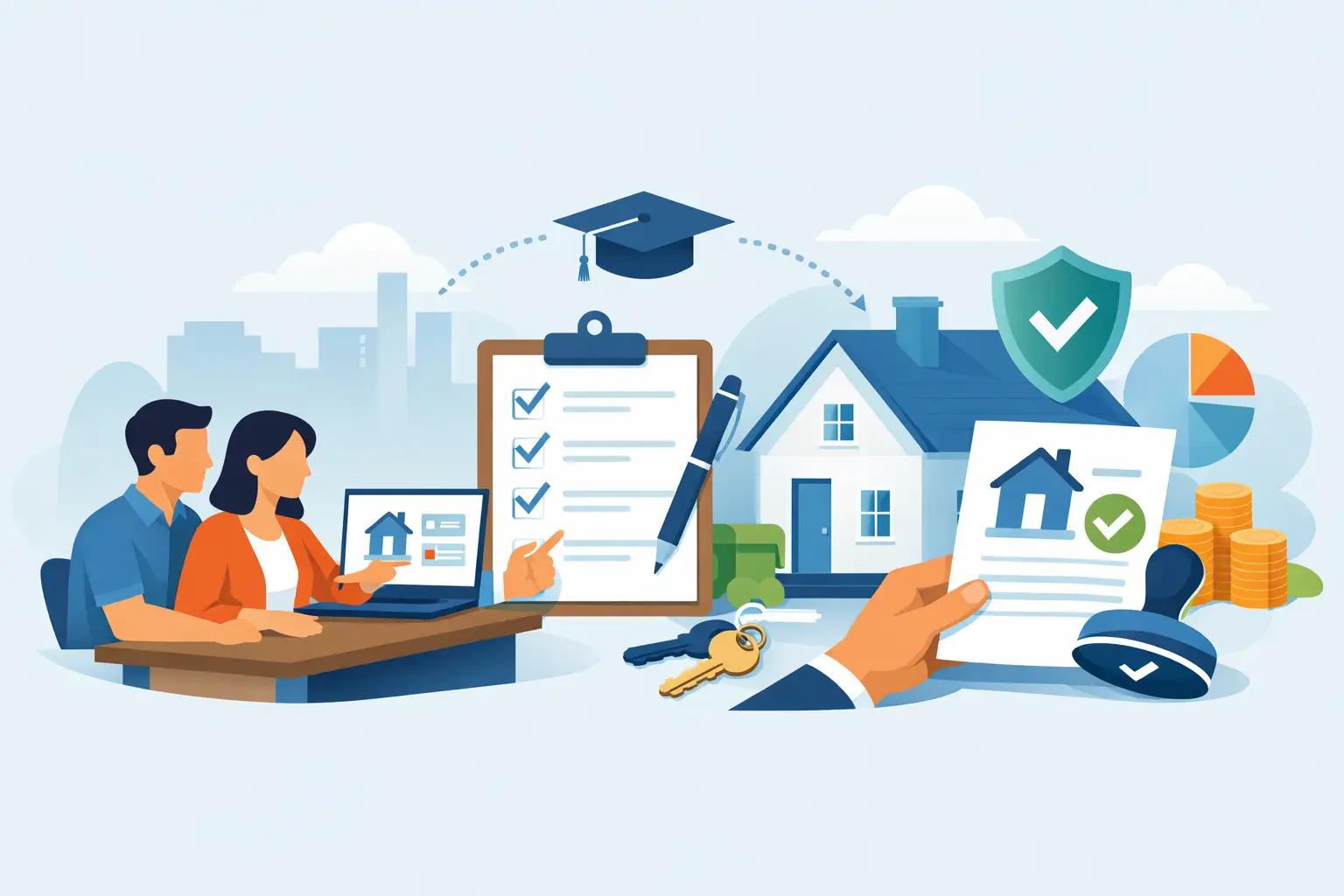
A lot of buyers assume mortgage approval comes down to three things only – credit score, income, and down payment. Those matter most, of course, but if you’re asking, can homebuyer education help mortgage approval, the honest answer is yes, sometimes in direct ways and often in indirect ones.
That distinction matters. A homebuyer education course usually will not magically override weak credit, high debt, or unstable income. But it can improve your odds in specific loan programs, help you qualify for assistance, and reduce the mistakes that cause applications to stall, get reworked, or fall apart late in the process.
When homebuyer education helps mortgage approval directly
In some cases, homebuyer education is not just helpful – it is required. This is especially common with first-time homebuyer programs, down payment assistance programs, and certain affordable lending options backed by state or local housing agencies.
If you are applying for one of those programs, completing an approved course can be part of the qualification process. In that situation, homebuyer education helps mortgage approval because without it, your file may not meet program rules. It is less about impressing an underwriter and more about checking a required box.
This comes up often for buyers using grants or forgivable second mortgages for down payment help. The assistance program may require a certificate from a HUD-approved counseling agency or an accepted online education provider before closing. Some conventional affordable programs also require education if all borrowers are first-time buyers.
So if your financing plan includes any type of assistance, it is smart to ask early whether a course is mandatory, when the certificate must be completed, and whether the provider must be on an approved list. Waiting until the last week before closing can create unnecessary stress.
Can homebuyer education help mortgage approval if it is not required?
Yes, but the benefit is usually practical rather than formal.
Lenders approve mortgages based on risk. They are looking at whether you appear able and likely to repay the loan. The course itself does not usually change your raw numbers. It will not lower your debt-to-income ratio overnight or erase a late payment from last year.
What it can do is help you present a cleaner, more prepared application. Buyers who understand how mortgage underwriting works are less likely to move money around carelessly, open new credit before closing, miss documentation requests, or misunderstand what they can truly afford. Those errors do not always cause denials, but they do cause delays and red flags.
A good education course can also help you spot trouble before you apply. You may realize your bank deposits are poorly documented, your credit card utilization is too high, or the payment you were targeting would leave you financially stretched. Catching those issues early can make the difference between applying too soon and applying at the right time.
What lenders actually care about
If you want the clearest answer to can homebuyer education help mortgage approval, it helps to separate what lenders must verify from what education improves around the edges.
Lenders primarily care about your credit profile, income stability, assets, debts, and the property itself. They also care about consistency. Are your pay stubs aligned with your tax returns? Are your deposits sourced? Is your employment history stable? Does the home meet lending guidelines?
Homebuyer education does not replace any of that. It supports it.
Think of it this way: the course is not the engine of approval, but it can make the ride a lot smoother. A buyer who understands escrow, reserves, closing costs, and debt ratios tends to make fewer last-minute financial moves that complicate underwriting.
That is why education can be especially useful for first-time buyers. Not because lenders reward you for trying hard, but because the mortgage process has a lot of rules that are not obvious until you are in the middle of them.
Where homebuyer education can make the biggest difference
The biggest payoff usually shows up in preparation.
For one buyer, the course may clarify that a 3 percent down payment does not mean 3 percent total cash needed. That insight gives them time to budget for closing costs and reserves before they apply. For another buyer, it may explain how credit utilization works, leading them to pay down balances and improve their score before preapproval.
It can also help buyers choose a better loan path. Someone who assumed they needed 20 percent down may learn they qualify for a lower-down-payment option. Another buyer may realize a down payment assistance program fits their budget better than draining savings for a larger down payment.
These are not small improvements. They affect approval odds because they affect the quality of the overall application and the buyer’s ability to follow through.
What a good homebuyer education course usually covers
Most quality courses explain the mortgage process from preapproval through closing and beyond. That often includes credit basics, budgeting, loan types, closing costs, home inspections, insurance, and what happens after you get the keys.
The best programs do more than define terms. They help you connect the dots between your everyday financial choices and what happens in underwriting. If you learn why large undocumented deposits can create questions, or why changing jobs during escrow can complicate approval, you are less likely to do those things at the worst possible time.
Some courses also include counseling or one-on-one support. That can be especially valuable if your situation is not straightforward. Maybe you are self-employed, recently paid off collections, or need to combine gift funds with your own savings. General education helps, but personalized guidance can help you turn knowledge into a plan.
The trade-off: education helps, but it is not a shortcut
This is where buyers need a realistic expectation.
If your credit score is below a program minimum, your debt load is too high, or your income cannot support the payment, taking a class will not fix the underlying issue. Education is useful, but it is not a substitute for financial readiness.
It also matters which course you take. Not every certificate will satisfy every program. If you need the course for loan eligibility or assistance funds, verify the provider first. Otherwise, you could spend time on a course that is informative but not accepted for your financing.
There is also the question of timing. Taking a course too late limits its value. The earlier you complete it, the more time you have to act on what you learn. A buyer who takes the course six months before applying can improve savings habits, reduce debt, and organize paperwork. A buyer who takes it two days before closing mostly gets information, not strategy.
How to use homebuyer education strategically
If you are serious about buying within the next year, treat education as a planning tool, not just a requirement.
Start by figuring out whether your target loan or assistance program requires it. Then use the course to pressure-test your finances. Are you truly ready for the monthly payment, maintenance, and cash needed at closing? Do you understand what documentation a lender will ask for? Have you reviewed your credit and bank statements with an underwriter’s eye, not just a consumer’s eye?
This is also a good time to ask smarter questions. Instead of asking only, “How much house can I buy?” ask, “What would make my file stronger in the next 90 days?” That shift in thinking is where education really pays off.
For many buyers, the real win is confidence. Not blind confidence, but informed confidence. You know what lenders are looking for, what could derail the process, and what steps actually improve your chances.
At Clear to Close, that is the whole point of mortgage education – not to make the process sound easy, but to make it understandable enough that you can make better moves before your application is on the line.
So, can homebuyer education help mortgage approval?
Yes – especially if it is required for your loan program, tied to down payment assistance, or completed early enough to improve your financial readiness. And even when it does not directly affect the approval decision, it can reduce errors, sharpen your preparation, and help you avoid the kind of surprises that turn a promising application into a stressful one.
If you are preparing to buy, think of homebuyer education as one of the few steps that can make you both more informed and more mortgage-ready at the same time. That is a rare combination, and it is worth using before the paperwork starts moving.
Leave a Reply