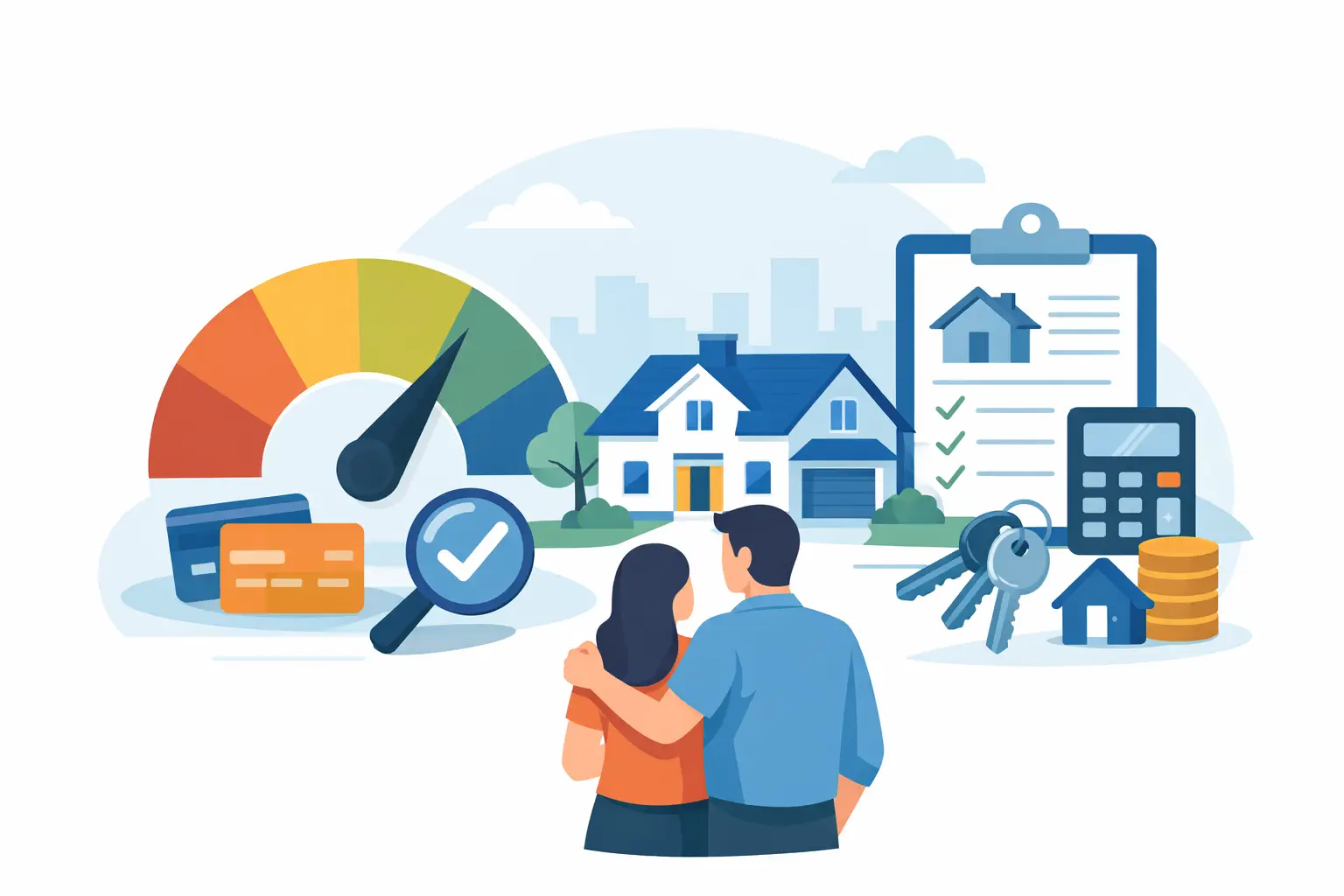
A 20-point score change can feel small until you see what it may mean for a mortgage payment, an interest rate, or the loan options available to you. This credit score mortgage guide breaks down what lenders actually look at, what your score can influence, and how to prepare without making rushed financial moves.
Your credit score is not a grade on whether you are responsible enough to own a home. It is a risk tool lenders use alongside your income, debts, down payment, and property details. A lower score does not automatically end your homeownership plans, and a high score does not replace the rest of your financial picture. The goal is to understand where you stand and build a strategy from there.
How Lenders Use Your Credit Score for a Mortgage
When you apply for a mortgage, the lender typically pulls credit reports from the three major credit bureaus: Equifax, Experian, and TransUnion. Mortgage underwriting often uses older versions of FICO scoring models, not necessarily the score displayed in your banking app or on a free credit-monitoring site.
That can be surprising. The score you see online is still useful for tracking general progress, but it may not match the score a mortgage lender uses. Think of it as an early signal rather than a final answer.
If you are applying alone, lenders commonly use the middle of your three mortgage credit scores. If you apply with a co-borrower, they generally use the lower middle score between the two applicants. For example, if your middle score is 720 and your partner’s is 655, the 655 score may drive loan pricing and eligibility.
Your score can affect three major parts of the loan:
- Whether you qualify for a particular loan program
- The interest rate and mortgage insurance costs you may be offered
- How much flexibility you have with your down payment, debt-to-income ratio, or loan terms
Credit matters, but it is only one part of the file. A buyer with a 660 score, stable income, manageable debt, and savings may be in a better position than someone with a 760 score and high monthly obligations.
Credit Score Mortgage Guide: What Score Do You Need?
There is no single minimum score for every mortgage. Loan programs set baseline standards, but lenders can add their own requirements, often called overlays. That is why two lenders may give the same buyer different answers.
Conventional loans often require a score around 620 or higher, though stronger scores usually bring better pricing. FHA loans may allow scores as low as 500 in certain cases, but borrowers with scores between 500 and 579 generally need a larger down payment. Many lenders set higher practical minimums than the FHA program itself.
VA and USDA loans do not have a universal minimum credit score written into the core program rules, but individual lenders often do. In practice, many borrowers find that scores in the low-to-mid 600s create more options. If you are eligible for a VA loan, do not assume a less-than-perfect score rules you out. It may still be worth getting a clear review of your full profile.
The best target depends on your timeline. If you hope to buy in a few months, focus on preventing score drops and correcting issues that can be resolved quickly. If your purchase is a year away, you may have more room to reduce debt, establish payment history, and improve the pricing available to you.
Why a Better Score Can Save More Than You Expect
A stronger score may lower your interest rate, but that is not the only potential benefit. On a conventional loan with less than 20% down, it can also reduce private mortgage insurance. The combined savings can make a meaningful difference over time.
Still, waiting for a perfect score is not always the right move. Home prices, rent costs, available inventory, your lease timing, and your overall readiness all matter. The right question is not simply, “Can I get my score higher?” It is, “Would waiting improve my financial position enough to justify delaying my purchase?”
A thoughtful loan professional can help compare both paths with real numbers instead of broad assumptions.
What Has the Biggest Impact on Mortgage Credit?
Payment history carries substantial weight. One recent late payment can hurt, especially if your credit file is otherwise thin. Paying every account on time from this point forward is one of the most reliable actions you can take.
Credit card balances also matter because scoring models look closely at utilization, or how much of your available revolving credit you are using. A card with a $5,000 limit and a $4,000 balance is 80% utilized, even if you make your payments on time. Paying that balance down can help, sometimes relatively quickly once the lower balance is reported.
For mortgage preparation, it is usually smart to aim for low utilization across all cards and avoid letting any one card report a high balance. You do not need to carry a balance to build credit. Paying in full is financially healthier when possible.
Other factors include the age of your accounts, the types of credit you use, recent inquiries, collections, charge-offs, and public records where applicable. Older negative items generally matter less as time passes, but unpaid collections or recent delinquent accounts can complicate underwriting even when your score appears workable.
Smart Moves Before You Apply
Start by reviewing all three credit reports early, ideally several months before you plan to buy. Look for accounts that are not yours, inaccurate late payments, duplicate collections, or incorrect balances. Errors are not guaranteed to be removed, but you deserve a report that reflects your actual history.
Then avoid common last-minute mistakes. Do not open a store card for a discount, finance furniture before closing, co-sign a car loan, or move large balances around without first asking how it could affect your mortgage file. A decision that seems minor can change your debt-to-income ratio, reduce your score, or trigger new underwriting questions.
If you have limited cash, prioritize actions with the clearest potential impact:
- Bring past-due accounts current, unless a housing advisor recommends a different approach for a specific collection or charge-off.
- Pay down revolving credit card balances, particularly cards that are close to their limits.
- Keep making every payment on time, including student loans, auto loans, and credit cards.
- Save documentation for unusual deposits, debt payments, or account activity that may need an explanation later.
Be cautious about closing old credit cards after paying them off. Closing an account can reduce your available credit and shorten the average age of your active accounts. If an annual fee makes the card impractical, weigh the cost against the potential credit impact before closing it.
Should You Pay Off Debt or Save for a Down Payment?
This is one of the most common homebuyer trade-offs. Paying down credit card debt can improve your score and lower your monthly debt obligations. Saving more cash can strengthen your down payment, reserves, and ability to handle closing costs. Neither choice is automatically better.
High-interest credit card debt is often the first place to focus, especially when balances are hurting utilization. But draining every dollar of savings to pay debt can leave you short on earnest money, inspections, moving costs, or emergency reserves. A balanced plan is usually more sustainable than an all-or-nothing approach.
When a Low Score Is Not the Whole Story
A score does not explain why your credit looks the way it does. A missed payment after a job loss, medical event, divorce, or temporary hardship may deserve context. Lenders still must follow underwriting guidelines, but a documented explanation can help them understand the timeline and whether the situation has been resolved.
Likewise, buyers with little credit history are different from buyers with damaged credit. If you have few accounts but pay bills reliably, a lender may have options to review alternative credit references, depending on the program. Do not assume that having no credit cards means you cannot qualify.
The practical next step is to get a mortgage-specific review before you begin touring homes seriously. That gives you time to address issues, estimate a comfortable payment, and understand which loan paths fit your situation. Clear to Close: Your Mortgage Guide believes preparation should make the process feel calmer, not more intimidating.
Your credit score is a starting point, not a verdict. Give yourself enough time to see the full picture, make targeted improvements, and choose a homebuying timeline that supports both your financial goals and your peace of mind.
Leave a Reply