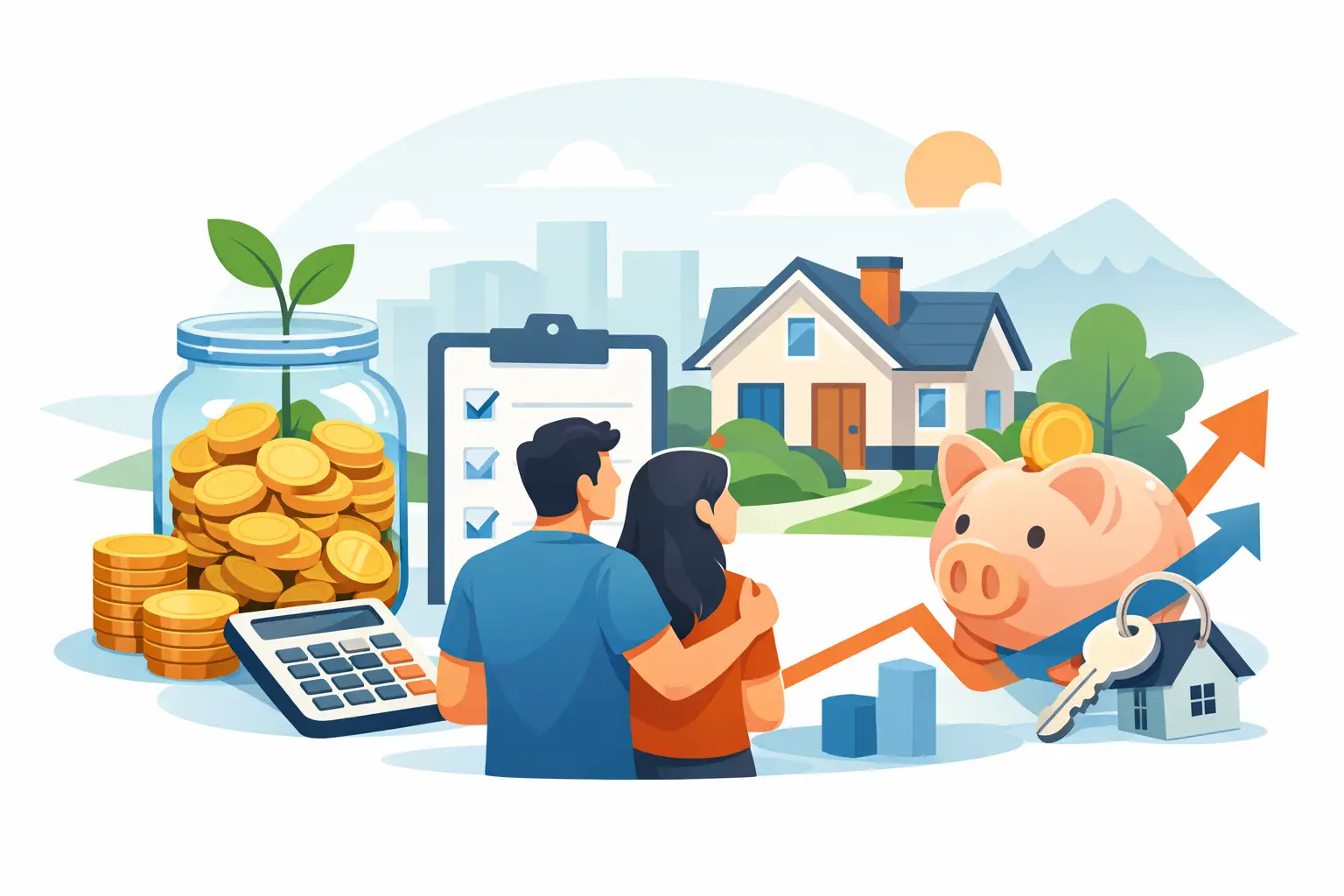
A first home savings plan is more than picking a number for a down payment and hoping you reach it. It is a practical way to turn “we want to buy someday” into a timeline, a monthly savings target, and a clearer picture of what homeownership will actually cost.
That clarity matters because a home purchase asks for money in several places at once. There is the down payment, yes, but there are also closing costs, moving expenses, inspections, initial repairs, and the cash cushion you will want after the keys are in your hand. Planning for the full picture can help you avoid draining every dollar you have just to get to closing.
What a First Home Savings Plan Should Cover
In the United States, “first home savings plan” is not a specific federally sponsored account or loan program. It is your personal strategy for saving and preparing to buy. The best plan is built around your likely purchase price, your timeframe, and your comfort level with a monthly housing payment.
Start by separating your goal into three buckets: money needed to close, money needed to move and settle in, and money you will keep in reserve. Combining all three into one vague savings goal can make progress hard to measure. Separating them helps you see whether you are truly getting closer to being ready.
Your down payment
Your down payment is the portion of the home price you pay upfront. It is often misunderstood as a fixed 20% requirement. While putting 20% down can eliminate private mortgage insurance on many conventional loans, it is not the only path to homeownership.
Depending on the loan program and your qualifications, you may be able to buy with far less. Some conventional options allow low down payments, FHA loans can work for buyers who meet their guidelines, and VA and USDA loans may offer little to no down payment for eligible borrowers. The right choice depends on your credit, income, location, military eligibility, and overall financial picture.
A smaller down payment can get you into a home sooner, but it may mean a higher loan balance, mortgage insurance, or a higher monthly payment. A larger down payment can lower some costs, but waiting too long to save every possible dollar may not be the best move either. The goal is not to chase a perfect percentage. It is to choose a purchase plan you can afford and sustain.
Closing costs
Closing costs are the fees and prepaid items required to finalize a mortgage and transfer ownership. They can include lender fees, appraisal fees, title services, recording charges, prepaid homeowners insurance, and property tax reserves. Your exact amount will vary by loan type, location, purchase price, and timing.
As a planning estimate, many buyers set aside roughly 2% to 5% of the purchase price for closing costs. That is not a guarantee of what you will pay, but it gives your savings plan a more realistic starting point. In some situations, a seller credit, lender credit, or local assistance program can help with these expenses. Treat potential help as a possibility until you understand the eligibility rules and have it confirmed.
Your post-closing cushion
A house can surprise you quickly. The water heater may be near the end of its life. The refrigerator may not make it through the first month. Even a well-maintained property can come with expenses that do not show up in your current rental budget.
Try not to use every dollar you have for the down payment and closing table. Keeping emergency savings after closing is one of the most practical ways to make homeownership feel more secure. The amount is personal, but a reserve that covers several months of essential expenses is a strong target when your timeline allows.
Build Your First Home Savings Plan Around a Real Number
It is difficult to save consistently for a goal that has no definition. Rather than choosing a down payment number at random, start with a rough home price range and work backward.
For example, a buyer considering a $300,000 home might plan for a 5% down payment of $15,000. If they estimate 3% for closing costs, that is another $9,000. Add $3,000 for moving, basic purchases, and immediate repairs, plus a reserve they do not intend to spend at closing. Their full savings target may be much larger than the down payment alone.
That does not mean every buyer needs the same amount of cash. A buyer with down payment assistance, a VA loan, or a seller credit may need less upfront. A buyer purchasing in an area with high taxes, insurance costs, or closing fees may need more. The value of this exercise is that it replaces guesswork with a number you can adjust as you learn more.
Next, divide your target by your timeframe. If you need $24,000 over 24 months, your starting savings goal is $1,000 per month. If that number feels impossible, you have useful information. You may need a longer timeline, a lower target price, a different loan option, reduced expenses, additional income, or a closer look at assistance programs.
Choose Where to Keep Your Homebuying Money
For a home purchase within the next few years, safety and access usually matter more than chasing the highest possible return. Your down payment and closing funds should not be exposed to major market swings right before you need them.
Many buyers use a separate high-yield savings account for their home fund. It keeps the money accessible while creating a helpful boundary between home savings and everyday spending. Some buyers use short-term certificates of deposit when their purchase timeline is more certain, but early withdrawal penalties and access needs should be considered first.
Investing may make sense for longer-term goals, but it introduces risk. If your purchase date is flexible and several years away, you may decide that some investment exposure fits your comfort level. If you hope to buy in the next 12 to 24 months, losing part of your down payment during a market downturn can create a frustrating delay. Your timeline should guide the decision.
Make Saving Automatic, Not Emotional
Willpower is a shaky homebuying strategy. Automatic transfers are more reliable because they make saving part of your routine rather than a monthly debate.
Set a transfer for payday, even if the first amount is modest. A consistent $100 or $200 per paycheck builds momentum, and you can increase it after a raise, bonus, tax refund, or debt payoff. If you are buying with a partner, decide whether each person will contribute a fixed dollar amount or a percentage based on income. Clear expectations now can prevent confusion later.
It also helps to give the account a specific name, such as “Home Down Payment and Closing.” That small detail makes it harder to view the money as available for a weekend trip or an impulse purchase.
Look for expenses that can be redirected without making your budget miserable. The most effective changes are usually recurring ones: a lower insurance premium, a paid-off car loan, reduced high-interest debt payments, or a subscription cleanup. One-time cuts can help, but permanent monthly savings create more room in your plan.
Protect the Mortgage Readiness Behind Your Savings
Cash is only one side of mortgage preparation. As your savings grows, protect the financial profile a lender will review.
Pay every bill on time, keep credit card balances manageable relative to their limits, and be cautious about opening new credit accounts before applying. Avoid taking on a large car payment or other major debt if a mortgage is a near-term goal. A new monthly payment can change how much home you qualify for, even if you have saved a solid down payment.
Keep your income and account records organized as well. Lenders generally need to document where your funds came from. Regular transfers from your paycheck into a dedicated savings account are easier to explain than large, unexplained deposits shortly before you apply. If family may help with your purchase, understand that gifted funds often come with documentation requirements.
Check Your Plan Before You Feel “Ready”
You do not have to wait until you have every dollar saved to begin learning what you may qualify for. An early conversation with a knowledgeable mortgage professional can help you compare loan options, estimate a realistic payment, and identify gaps in your plan.
The key word is early. A pre-approval is most useful when it supports your strategy, not when it pressures you to buy before you are comfortable. Ask what payment range makes sense based on your full budget, including property taxes, homeowners insurance, mortgage insurance if applicable, utilities, and maintenance.
Revisit your plan every three to six months. Interest rates, home prices, rent, income, debt balances, and assistance programs can all change. A plan that was right last year may need a new savings target today.
Buying your first home is not a race to accumulate the biggest down payment possible. It is a decision to prepare enough cash, enough monthly breathing room, and enough confidence to move forward on your terms. A thoughtful savings plan gives you all three.
Leave a Reply