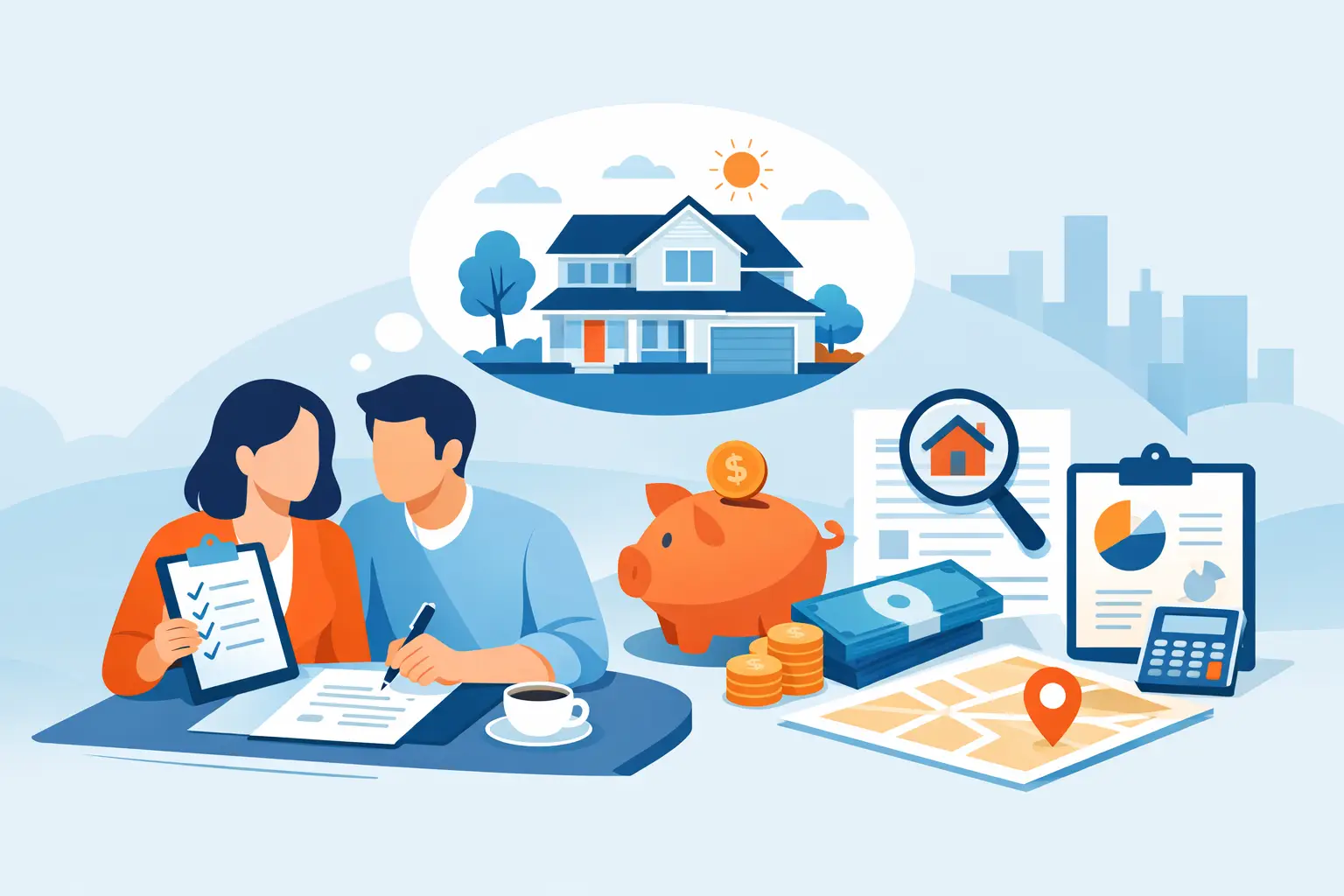
The house payment you see in an online listing is rarely the number that decides whether a home feels comfortable six months after closing. Property taxes, insurance, repairs, moving costs, and a higher utility bill can change the picture quickly. If you are researching how to plan home purchase costs before falling in love with a property, that is a smart place to start.
A strong homebuying plan is not about predicting every detail. It is about creating enough financial room to make decisions calmly, compare options clearly, and avoid stretching your budget just to win a bid.
How to Plan a Home Purchase Around Your Real Budget
Start with your monthly life, not a lender’s maximum approval amount. A lender evaluates your income, debts, credit, assets, and loan program guidelines to determine what you may qualify to borrow. That number is useful, but it is not automatically the amount you should spend.
Build a household budget using your take-home pay and your actual spending. Include recurring obligations such as car loans, student loans, credit card minimums, child care, subscriptions, and support payments. Then leave room for savings, travel, gifts, medical expenses, and the ordinary surprises that happen in a normal year.
Next, estimate the full monthly housing cost. This usually includes principal and interest on the mortgage, property taxes, homeowners insurance, and mortgage insurance if required. If the home is in a homeowners association, add the HOA dues. Depending on the property, you may also need to budget for flood insurance, well or septic maintenance, or higher heating and cooling costs.
A useful question is not just, “Can I make this payment?” Ask, “Can I make this payment while still saving for emergencies and enjoying a reasonable life?” A slightly lower purchase price can create far more flexibility than buyers expect.
Think beyond the monthly payment
Your cash needs do not end when the seller hands over the keys. You may need earnest money when your offer is accepted, a down payment at closing, and closing costs for lender fees, title services, prepaid taxes, and insurance. Inspection fees, appraisal fees, moving expenses, appliances, window coverings, and immediate repairs can add up as well.
Some costs can be negotiated or structured differently. A seller may agree to contribute toward closing costs in certain transactions, and some loan programs permit gift funds or down payment assistance. Those options can help, but they do not make the home free. Understand the terms and plan for the expenses you will still pay yourself.
Check Your Credit Before You Need a Mortgage
Your credit profile affects more than whether you can qualify. It can influence your interest rate, mortgage insurance cost, and the loan options available to you. Checking it early gives you time to correct errors and improve weak areas without the pressure of a purchase contract.
Review all three credit reports for accounts that do not belong to you, incorrect late payments, outdated balances, or old addresses that may signal a mixed file. If you find an error, begin the dispute process promptly. Keep records of what you submit and any responses you receive.
If your credit needs improvement, focus on the habits that tend to matter most: pay every bill on time, avoid adding new debt, and keep credit card balances low relative to their limits. Paying down revolving balances can be especially helpful, but do not drain every dollar of savings to do it. You still need cash reserves for the buying process and for life after closing.
Avoid major financial changes while preparing for a mortgage. Opening a new credit card, financing furniture, leasing a car, or changing jobs can affect your application. Some changes are unavoidable, of course. If a job move or large purchase is on the horizon, talk through the timing with a mortgage professional before assuming it will not matter.
Set a Savings Target That Includes a Cushion
Many first-time buyers believe they need 20% down before they can consider purchasing. A 20% down payment can eliminate private mortgage insurance on many conventional loans, but it is not the only path to homeownership. Depending on eligibility and location, buyers may have access to conventional loans with lower down payments, FHA financing, VA loans, USDA loans, or assistance programs.
The best down payment amount depends on your loan options, purchase price, credit profile, and remaining savings. Putting every available dollar toward the down payment may lower your mortgage payment, but it can leave you exposed if the water heater fails in your first month. On the other hand, a smaller down payment may preserve cash but lead to a higher payment or mortgage insurance.
Plan your savings in separate buckets so the goal feels more concrete:
- Down payment funds
- Estimated closing costs and prepaid items
- Inspection, appraisal, and moving expenses
- An emergency reserve after closing
Keep homebuying funds somewhere safe and accessible. Lenders also need to verify where your money came from, so avoid unexplained large deposits. If you receive a gift from a family member, document it properly rather than moving money around casually.
Get Pre-Approved Before You Make Offers
A pre-approval is more useful than an online affordability calculator because it is based on your actual financial information. Your lender typically reviews income, assets, credit, and debts, then provides an estimate of what you may be eligible to borrow under specific assumptions.
This step can reveal issues while you still have time to solve them. Perhaps a debt payment is affecting your debt-to-income ratio, your bank statements need clarification, or the loan amount you expected requires more cash than you planned. Finding that out before you are competing for a home is a gift.
Pre-approval is not a final loan approval. The property must still meet appraisal and underwriting requirements, and your finances will be reviewed again before closing. Still, it gives you a more realistic price range and signals to sellers that you are prepared.
When comparing lenders, look beyond the advertised interest rate. Ask about estimated cash to close, mortgage insurance, discount points, lender fees, rate-lock options, and how quickly the team can close. Two loans with similar rates can have meaningfully different costs.
Choose a Home Search Strategy, Not Just a Price Range
Once you know your comfortable budget, decide what matters most in your first home. Location, commute, school needs, condition, yard size, and future flexibility often compete with one another. Few buyers get every item on their wish list, so separate your non-negotiables from preferences.
For example, a move-in-ready home may cost more upfront but reduce the risk of immediate repair expenses. A home that needs cosmetic work may offer a lower price, yet it can demand more time and money than expected. A condo may simplify exterior maintenance but come with HOA dues and rules. There is no universal best choice – only the choice that fits your finances and daily life.
Before making an offer, review comparable sales with your real estate agent and avoid treating a listing price as a statement of value. Consider how much you are willing to offer, how much earnest money you can provide, and which contingencies you need. Waiving protections to make an offer stronger can create real risk, particularly when your budget has little room for surprises.
Keep Your Finances Steady Until Closing
After your offer is accepted, the goal is simple: make underwriting boring. Continue paying bills on time, avoid new debt, do not move money between accounts without a clear paper trail, and respond quickly when your lender requests documents.
Do not make a furniture purchase based on the assumption that your loan is finished. Even a seemingly small monthly payment can change your debt-to-income ratio before closing. Save the new sofa, appliances, and renovations for after the keys are in your hand and your emergency fund is intact.
A home purchase is a financial decision, but it is also a personal one. Give yourself permission to choose the home that supports your stability, not the one that pushes your approval to its limit. Clear planning now gives you more than a path to closing – it gives you room to feel at home once you get there.
Leave a Reply