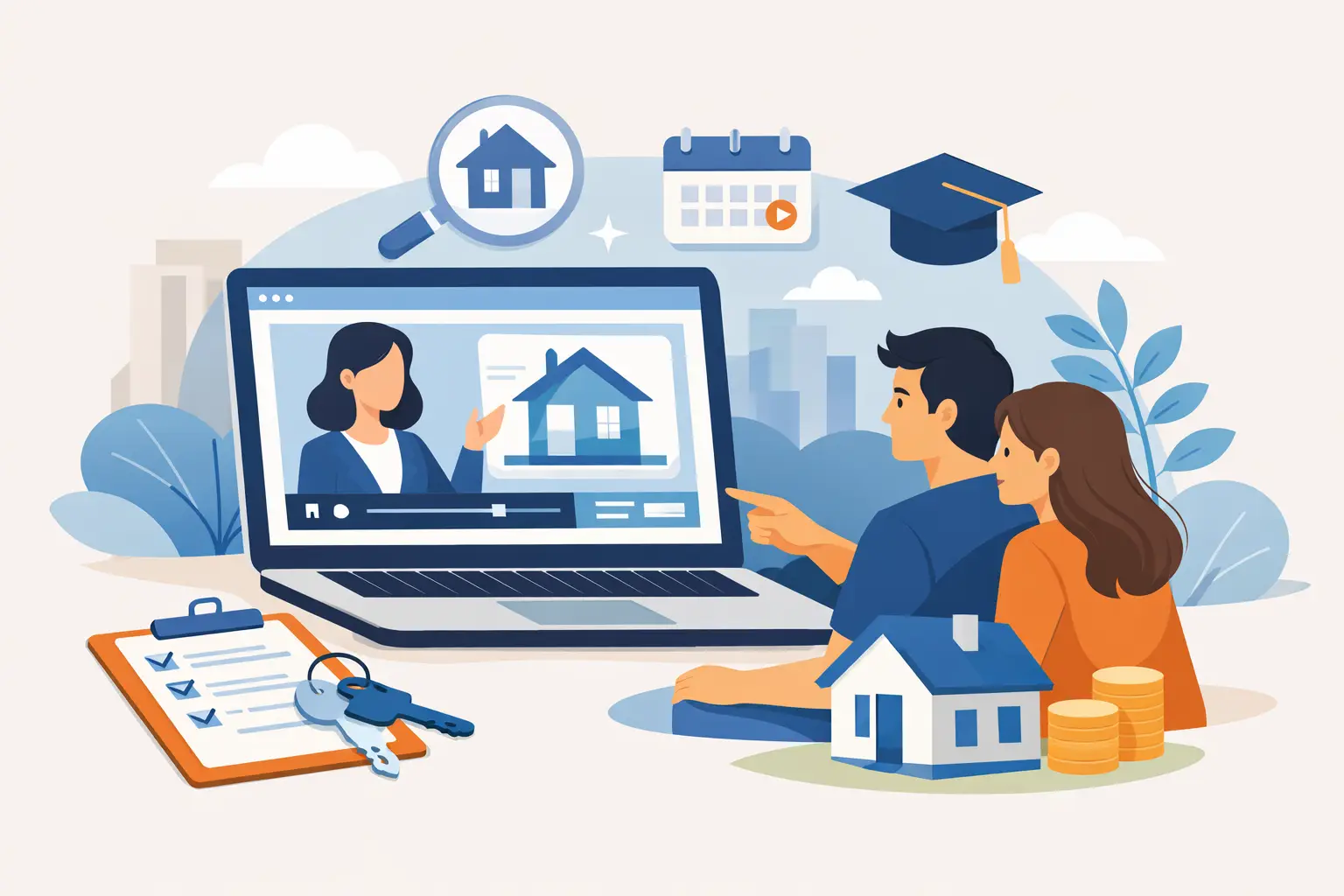
If you’re serious about buying a home, but still feel fuzzy on what happens between saving for a down payment and getting the keys, a first-time homebuyer education course online can close that gap fast. For many buyers, the issue is not motivation. It is not knowing what lenders look for, how loan options differ, or where small mistakes can get expensive.
That is exactly where these courses can help. A good course gives structure to a process that often feels scattered. Instead of piecing together advice from social media, friends, and random articles, you get a clearer path from early planning to closing day.
What a first-time homebuyer education course online actually teaches
Most people hear the phrase and assume it is a basic budgeting class. Some courses do cover budgeting, but the better ones go much further. They usually walk through credit, debt, savings, mortgage basics, home shopping, the loan process, closing costs, and what happens after you become a homeowner.
That matters because first-time buyers usually are not dealing with one decision. They are dealing with a chain of decisions. How much house can you comfortably afford? Should you focus on FHA, conventional, or a local assistance program? Is your credit score good enough now, or would waiting a few months put you in a stronger position? A course can help you understand how those decisions connect.
Many also explain terms that tend to confuse buyers early on, like pre-approval versus prequalification, private mortgage insurance, escrow, debt-to-income ratio, and seller concessions. When those terms are explained in plain English, the process becomes less intimidating and much easier to plan for.
Why online homebuyer education works well for busy buyers
One reason online courses have become so common is simple: they fit real life. If you work full time, have kids, or are trying to coordinate finances with a partner, attending an in-person class on a fixed schedule is not always realistic.
Online education gives you flexibility. You can complete modules at night, on weekends, or in short chunks during the week. That makes it easier to learn at your own pace, especially if some topics feel straightforward and others need a second look.
There is also a confidence factor. Some buyers are embarrassed to ask what they think are basic questions. Online learning gives them space to absorb the material first, then come to a lender, housing counselor, or advisor with better questions. That can lead to smarter conversations and fewer rushed decisions.
When a course is just helpful – and when it may be required
Not every buyer is required to take a homebuyer education course. But in some cases, it is more than a nice extra.
Certain down payment assistance programs, grants, or first-time buyer loan programs require completion of an approved course before closing. Some state and local programs do this because they want buyers to understand the responsibilities that come with homeownership, not just the excitement of getting approved.
Even when it is not required, taking a course can still be useful if you are in one of these situations: you have never gone through a mortgage process before, your budget is tight, your credit needs work, or you are counting on assistance funds to make the purchase happen. In those cases, education is not just informative. It can directly affect how prepared and competitive you are.
What to look for in a first-time homebuyer education course online
Not all courses are equally useful. Some are clear, current, and practical. Others feel generic and outdated.
Start by checking whether the course is accepted by the assistance program or lender you may use. This is especially important if you are pursuing grants, down payment assistance, or special financing. A course might be informative but still not meet a program’s requirement.
Next, pay attention to the actual content. A strong course should explain more than just the benefits of buying a home. It should prepare you for the numbers. That includes monthly payment components, cash needed at closing, ongoing maintenance costs, and how your financial picture affects loan approval.
It also helps if the course uses examples that sound like real life. Buyers learn better when they can see how a credit card balance affects debt-to-income ratio, or how a lower down payment can change both monthly payment and mortgage insurance. Scenario-based teaching is often more useful than broad definitions.
Finally, look at usability. If the course is hard to navigate, packed with jargon, or clearly designed to push a sale, it may not give you the clarity you need. The goal should be education first.
What an online course can do for your mortgage readiness
A course will not raise your credit score overnight or guarantee approval. But it can absolutely help you make better decisions before you apply.
For example, many buyers do not realize that opening a new credit account, financing a car, or making large unexplained deposits during the mortgage process can create problems. A course can flag issues like these early, while there is still time to adjust.
It can also help you set more realistic expectations. Some buyers focus only on the listing price and forget about taxes, insurance, closing costs, repairs, and reserves. Others assume they need 20 percent down when they may have lower-down-payment options available. Good education corrects both kinds of misunderstandings.
That kind of clarity can save money, but it can also reduce stress. When you understand what is coming, you are less likely to panic at normal parts of the process.
The limits of online homebuyer education
Online learning is useful, but it is not a substitute for personalized advice.
A course can explain how FHA loans generally work. It cannot tell you whether FHA is the best fit for your income, debt profile, property type, and long-term plans. It can teach the basics of closing costs, but it cannot estimate your exact numbers without your market, price point, and financing details.
That is the trade-off. Online courses are efficient and affordable, and sometimes free, but they are broad by design. If your situation is more complicated – self-employment income, recent credit issues, a divorce, gift funds, or a plan to use multiple assistance programs – you may still need one-on-one guidance.
That is why the smartest approach is often both. Use education to build your foundation, then bring your specific questions to a trusted mortgage professional or homebuyer advisor.
How to get the most value from a first-time homebuyer education course online
Take the course earlier than you think you need to. A lot of buyers wait until they are already touring homes or trying to make an offer. By then, you may be learning lessons you would rather have known three months ago.
Keep notes as you go, especially around terms, deadlines, and anything tied to your own finances. If the course mentions debt-to-income ratio, write down your current debts and estimate where you stand. If it explains closing costs, start a separate savings target for them instead of folding everything into your down payment goal.
It also helps to compare what you learn with your own buying plan. If the course says maintenance costs matter, think honestly about whether you are looking at condos, older single-family homes, or move-in-ready properties. If it explains mortgage insurance, look at how different down payment levels could affect your monthly payment.
Learning sticks better when it is attached to real decisions.
A smarter first step before pre-approval
For many buyers, pre-approval feels like the beginning. In reality, education should come first. When you understand the process before you apply, you are better positioned to shop with confidence, compare loan options intelligently, and avoid surprises that throw off your timeline.
That does not mean you need to become a mortgage expert. You do not. You just need enough clarity to recognize what matters, what questions to ask, and what habits support your approval instead of hurting it.
At Clear to Close: Your Mortgage Guide, that is the whole point of homebuyer education. Not to make the process sound simpler than it is, but to make it understandable enough that you can move forward with a plan.
Buying your first home will always come with a learning curve. The good news is that you do not have to learn it the hard way.
Leave a Reply