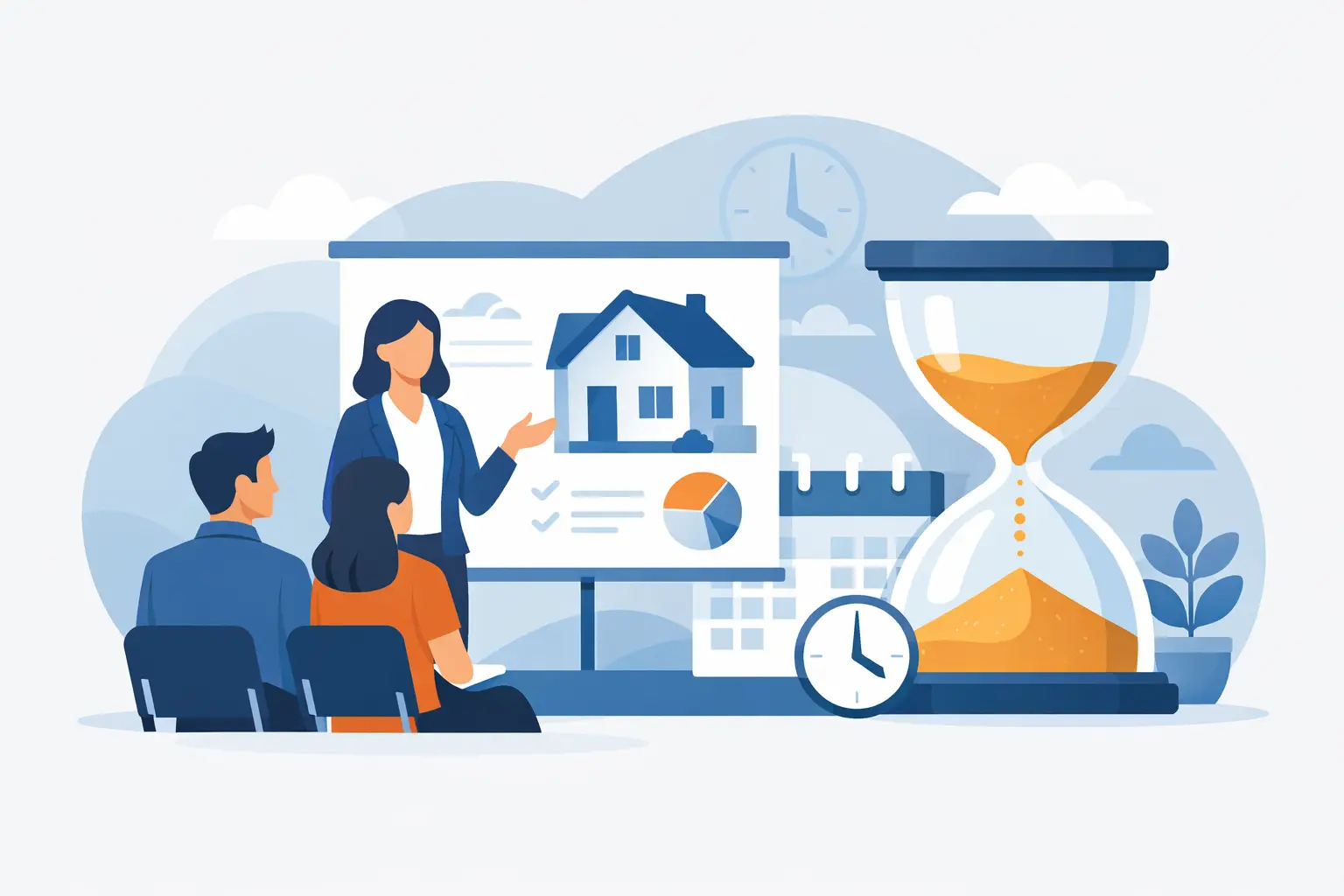
If you are trying to plan your next move in the buying process, one of the most common questions is simple: how long is a homebuyer education class? The short answer is that most classes take between 4 and 8 hours, but the real answer depends on why you need the course, who requires it, and whether you take it online or in person.
That range matters more than people think. A homebuyer education class can be a quick box to check, or it can affect your timeline for down payment assistance, closing, and loan approval. If you wait until the last minute, a course that seemed minor can suddenly feel like a delay.
How long is a homebuyer education class for most buyers?
For most first-time buyers, a homebuyer education course lasts about 6 to 8 hours total. Some are designed as a single-day workshop, while others are split into shorter modules you can complete over a few days. Online self-paced options may let you finish faster, but many still require you to work through a set number of sections before you receive a certificate.
There are also shorter versions. Some lender or counseling agency programs take around 4 hours, especially if the course is focused on core homeownership basics rather than a deeper counseling session. On the other end, some local housing agencies combine education with one-on-one counseling, which can push the full process beyond 8 hours.
So if you want a realistic planning number, assume one full afternoon at minimum and one full day in many cases.
Why the timing can vary
The biggest factor is not your attention span. It is the program requirement.
If you are taking the class because a down payment assistance program requires it, the course length is usually set by that program or by a HUD-approved housing counseling agency. If you are taking it to meet a conventional loan requirement, such as for certain first-time buyer products, the accepted format may be narrower and the completion standards may be stricter.
The format also changes the experience. An in-person workshop often runs on a fixed schedule, sometimes with breaks, sign-in requirements, and time for questions. That can make a 6-hour curriculum feel like an all-day commitment. An online course may cover the same material but let you pause and return later, which feels easier even if the total time is similar.
There is also a difference between education and counseling. A standard homebuyer education class teaches the basics of budgeting, credit, mortgage options, closing costs, and ownership responsibilities. A counseling session is more personal and may review your finances one-on-one. Some programs require both.
What is covered during the class?
Most homebuyer education courses are not just about the mortgage itself. They are meant to prepare you for the full financial picture of buying and owning a home.
You will usually see lessons on budgeting, saving for a down payment, understanding credit, comparing loan types, estimating monthly housing costs, and preparing for closing. Many classes also spend time on home inspections, insurance, escrow, and what changes after you become a homeowner.
That is one reason the class can take several hours. A good course is not just a quick slideshow. It is meant to help buyers avoid expensive mistakes, especially if this is their first purchase.
Online vs. in-person homebuyer education classes
If your main concern is time, online classes usually offer more flexibility. You can complete them at night, on a weekend, or in shorter chunks between other responsibilities. For busy buyers, that is often the easiest path.
Still, the fastest option is not always the best option. In-person classes can be helpful if you want live explanations, the ability to ask questions in real time, and a little more structure. If mortgage language feels overwhelming, a live setting may make the information easier to absorb.
Online courses also vary. Some are truly self-paced. Others include videos, quizzes, or timers that prevent you from skipping ahead too quickly. So while online sounds faster, it does not always mean you can finish in an hour and move on.
When do you need a homebuyer education class?
Not every buyer needs one, but many first-time buyers do. You are most likely to need a class if you are using down payment assistance, a first-time buyer grant, or a loan program that requires borrower education. Some lenders also strongly encourage it even when it is not mandatory.
This is where timing becomes practical. If your program requires a certificate before final approval or closing, you do not want to discover that requirement after your contract is signed. Taking the class early gives you more room to fix issues that come up, such as budget gaps or credit questions.
For many buyers, the best time to take the course is before house hunting gets serious. That way the information is still useful, not just procedural.
How long is a homebuyer education class if down payment assistance is involved?
When down payment assistance is part of the plan, assume the class will take closer to 6 to 8 hours, and sometimes longer if counseling is included. These programs tend to be more structured because the agency wants to confirm that borrowers understand the obligations tied to the assistance.
That does not mean the class is difficult. It just means there may be more required steps. You might need to register through an approved provider, complete all modules in order, pass a short quiz, and wait for a certificate. In some cases, your certificate may need to be dated within a certain time period before closing.
This is one of those areas where details matter. Two buyers in the same city may see different class requirements depending on the loan product or assistance source they use.
What can slow the process down?
The course itself is only one piece of the timeline. The bigger issue is often everything around it.
Registration can take time if classes fill up quickly. Certificate delivery can be immediate for some online programs, but delayed for others. If a counseling appointment is required, that may depend on advisor availability. And if you complete the wrong course for your program, you may have to start over with an approved provider.
That is why it helps to verify three things before you begin: who must approve the course, whether counseling is also required, and when your certificate needs to be submitted.
A lot of buyers assume any homebuyer education class will count. Sometimes it will. Sometimes it will not. This is a small detail that can create a very avoidable closing headache.
Is the class hard?
Usually, no. Most homebuyer education classes are built for regular consumers, not mortgage professionals. The goal is to explain the process in plain English and help you make better decisions.
The material can feel dense if you are brand new to buying, especially when the class gets into credit scores, debt ratios, loan estimates, and closing costs. But it is generally not academic or designed to trick you. If there is a quiz, it is often straightforward and based on the course content.
In many cases, the bigger challenge is simply setting aside enough uninterrupted time to complete it.
How to plan for the class without delaying your home purchase
A smart approach is to treat the class like an early step, not a last-minute requirement. If you think you may use a first-time buyer program or down payment assistance, ask about education requirements before you start touring homes.
Try to block out a realistic amount of time. If the course says 6 hours, do not schedule only 3 and hope for the best. If it is online, give yourself one or two sessions to finish it without rushing. If it is in person, plan for breaks, travel time, and possible follow-up items.
It also helps to save your completion certificate immediately and send it where it needs to go. That sounds obvious, but documents get lost all the time during a mortgage process that already has plenty of moving pieces.
At Clear to Close, this is one of those prep steps we like buyers to handle early because it lowers stress later.
The real answer buyers should remember
So, how long is a homebuyer education class? Usually 4 to 8 hours, with 6 to 8 being the safest expectation for many first-time buyer programs. The exact time depends on the course format, the loan or assistance program, and whether counseling is part of the requirement.
If you are not sure whether you need one, do not wait until the final stretch to ask. A few hours of education can save you much more time, money, and confusion once the buying process gets real. The best version of this class is not just the fastest one. It is the one that leaves you feeling more confident about the decision you are making.
Leave a Reply