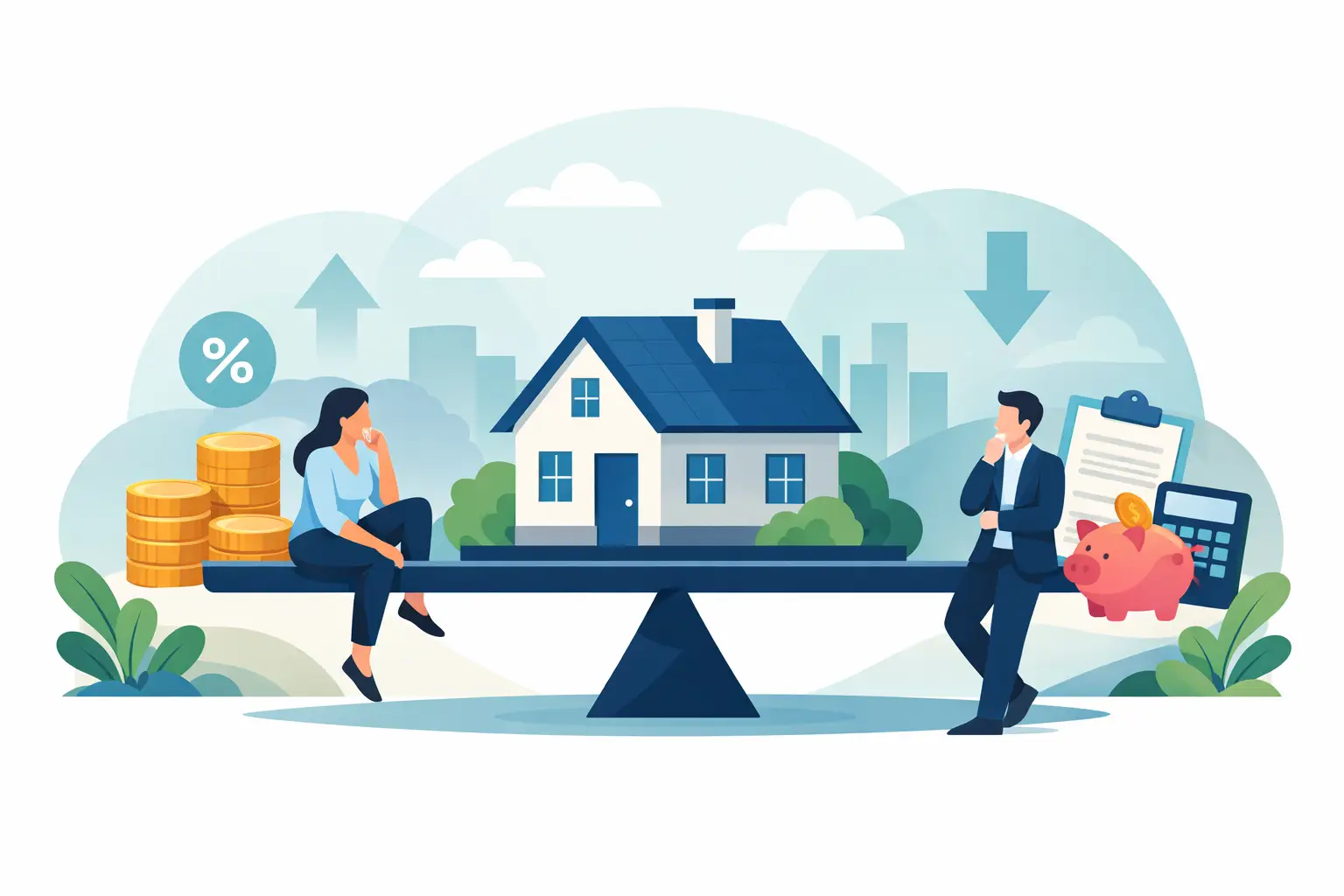
A lower rate looks great on paper. But if refinancing resets your loan clock, adds closing costs, or only saves you a small amount each month, the real question is this: is refinancing worth it for your situation, not just in general?
That answer depends on what you want the refinance to do. Some homeowners refinance to lower their monthly payment. Others want to get rid of mortgage insurance, shorten the loan term, switch from an adjustable rate to a fixed rate, or tap equity for a major expense. A refinance can be a smart move, but it is not automatically a money saver just because rates drop.
Is refinancing worth it when rates fall?
A rate drop gets most people interested in refinancing, and for good reason. Even a modest change in rate can affect your monthly payment and the total interest you pay over time. But rate alone does not tell the full story.
If you refinance, you are taking out a new mortgage to replace your current one. That means new loan terms, new closing costs, and a fresh repayment timeline. If your goal is to save money, you need to look at the whole picture: how much you will save each month, how much the refinance will cost upfront, and how long you plan to stay in the home.
For example, imagine your new payment would drop by $180 per month, but your refinance costs total $4,500. It would take about 25 months to break even. If you expect to move or sell before then, refinancing may not be worth it. If you plan to stay for several more years, it may be.
That is why the best refinance decisions usually start with a simple question: what problem am I trying to solve?
The main reasons refinancing can make sense
The most common reason to refinance is lowering the monthly payment. A lower interest rate can reduce what you owe each month, which may free up room in your budget. For households trying to improve cash flow, that can be meaningful.
Another strong reason is reducing total interest. This often happens when you refinance into a shorter term, such as moving from a 30-year loan to a 15-year loan. Your monthly payment may go up, but you can pay the home off faster and spend far less on interest over the life of the loan.
Some homeowners refinance to gain stability. If you currently have an adjustable-rate mortgage and want predictable payments, switching to a fixed-rate loan may be worth it even if the savings are not dramatic.
Refinancing can also help if your home value has increased or your loan balance has dropped enough to remove mortgage insurance. In that case, the refinance is not just about rate. It is about cutting a monthly cost that no longer serves you.
Then there is the cash-out refinance. This option lets you borrow against your home equity and receive cash at closing. It can be useful for home improvements, debt consolidation, or other large expenses, but it also increases the amount you owe on your mortgage. That trade-off matters.
When refinancing may not be worth it
There are times when refinancing sounds better than it actually is. One common example is focusing only on the monthly payment while ignoring the long-term cost.
Say you have already been paying on your mortgage for 10 years and refinance into a new 30-year loan. Your payment may drop, but you are also stretching repayment over a longer period again. That can increase the total interest paid, even with a lower rate.
Another issue is high closing costs. Refinance fees may include lender charges, title fees, appraisal costs, and other expenses. In some cases, those costs can be rolled into the new loan, but that does not make them disappear. It just means you are financing them and likely paying interest on them over time.
Refinancing may also be a poor fit if your credit has weakened since you got your original loan. If your credit score dropped or your debt-to-income ratio increased, the rate and terms you qualify for may not be favorable enough to justify the switch.
And if you are planning to move soon, the timing may not work. The shorter your remaining time in the home, the harder it is to recover refinance costs.
How to tell if refinancing is worth it for you
The clearest way to evaluate a refinance is to run the numbers against your real goals.
Start with the monthly savings. Compare your current principal and interest payment to the proposed new payment. Then ask how much the refinance will cost. Divide the total closing costs by the monthly savings to estimate your break-even point.
If the break-even point is 18 months and you plan to keep the home for five more years, that is promising. If the break-even point is 36 months and you expect to move in two years, that is less compelling.
Next, look beyond the payment. Check whether the refinance restarts your term, changes the total interest paid, or increases your loan balance. A lower monthly payment can still cost you more over time if the loan stretches much longer.
You should also weigh your broader financial priorities. If the refinance helps you stabilize your budget, remove mortgage insurance, or move from an uncertain loan type into a fixed rate, the value may go beyond a simple dollars-and-cents calculation.
Questions to ask before you refinance
A good refinance decision usually gets easier when you ask a few plain-English questions.
What is my goal? Lower payment, lower total interest, remove mortgage insurance, change loan type, or access cash are all very different goals. The right refinance for one may be the wrong refinance for another.
How long will I stay in the home? This affects whether you will actually benefit from the savings.
What are the total costs? Ask for a full estimate, not just a rate quote.
Will the new loan restart my term? If so, decide whether that helps or hurts your long-term plan.
Is my credit strong enough to get a meaningful benefit? Better credit often leads to better refinance terms.
How does this fit with my other debt and savings goals? Using a refinance to create breathing room can be smart, but only if it supports your bigger financial picture.
Cash-out refinancing deserves extra caution
Cash-out refinancing gets a lot of attention because it turns home equity into usable funds. That can be helpful, especially for repairs that protect the home or improvements that add value.
But using mortgage debt to pay off credit cards, finance lifestyle spending, or cover short-term budget problems can backfire. You are converting unsecured or shorter-term debt into debt tied to your home. If the new loan extends repayment over many years, the convenience today may cost more later.
That does not mean cash-out refinancing is always a bad idea. It means the reason matters. Borrowing against equity should be a strategic move, not just an easy one.
The bottom line on whether refinancing is worth it
Refinancing is worth it when it clearly improves your finances or supports a goal that matters to you. That might mean lowering your payment, reducing total interest, removing mortgage insurance, creating more stability, or using equity in a careful way. It is usually not worth it when the savings are small, the costs are high, or the new loan only looks better because the timeline got longer.
If you feel unsure, that is normal. Mortgage decisions are rarely one-size-fits-all, and the smartest move is often the one that matches your timeline, budget, and next chapter as a homeowner. A little math and the right questions can save you from making a change that only sounds good at first glance.
Leave a Reply